Why Some Fandoms Last for Generations
Most entertainment disappears surprisingly quickly. A television show becomes popular, dominates conversation for a season, and slowly fades. A bestselling book sits everywhere for a few years before becoming something people vaguely remember. A game attracts millions of players until the next major release takes its place. Popularity can be enormous without being permanent.
Then there are the exceptions.
Some fictional worlds survive for decades. Children discover characters their parents loved, while adults continue collecting merchandise, attending conventions, replaying games, rereading books, and debating stories they first encountered years earlier. New adaptations appear, old installments are rediscovered, and the fandom somehow keeps replacing one generation of fans with another.
Star Wars, Star Trek, The Lord of the Rings, Batman, Superman, Spider-Man, Pokémon, Doctor Who, and other long-running properties have survived enormous changes in technology and entertainment. They existed before streaming, social media, smartphones, and sometimes even home video, yet they continue finding audiences in completely different media environments.
The secret is not simply that these franchises are good. Thousands of excellent stories have disappeared from mainstream memory. Generational fandom requires something more complicated: memorable worlds, emotional attachment, communities, adaptability, nostalgia, and enough space for each generation to discover something of its own.
Popularity and Longevity Are Different Things
A cultural phenomenon can become massively popular without creating a lasting fandom.
Popularity measures how many people care about something now. Longevity measures whether people continue caring after the original moment has passed.
The difference becomes visible over decades.
A blockbuster may sell millions of tickets and then largely disappear from cultural conversation. Another movie may perform less spectacularly at first but inspire fan clubs, conventions, theories, sequels, collections, and communities that continue growing years later.
Long-lasting fandoms create participation rather than simple consumption.
Fans do not merely watch the story.
They continue doing something with it.
They discuss it, reinterpret it, collect it, quote it, imitate it, argue about it, and eventually introduce it to other people.
That continued activity keeps fictional worlds culturally alive.
Great Fandoms Usually Begin With a World Bigger Than One Story
One of the strongest predictors of fandom longevity is whether the fictional universe feels larger than the particular story being told.
Consider Star Wars. The original movie introduced audiences to only a small part of its galaxy, but references to ancient conflicts, political institutions, strange planets, mysterious powers, and previous generations suggested that countless other stories existed beyond the screen.
The Lord of the Rings creates an even stronger effect because Middle-earth possesses languages, histories, cultures, genealogies, legends, and geography extending far beyond the immediate adventure.
Fans can sense when a fictional world has depth.
That depth creates curiosity.
What happened before this story? What exists beyond this location? Who were these historical characters? How does this technology work? What are the rules governing this fictional society?
Every unanswered question gives fandom somewhere else to go.
Iconic Characters Can Outlive Their Original Stories
Long-lasting fandoms usually contain characters who can survive changes in actors, writers, formats, and generations.
Batman provides an obvious example.
The character has appeared in comics, television series, animation, films, games, novels, toys, and countless reinterpretations. Different versions can emphasize detective stories, psychological drama, superhero spectacle, crime noir, or even comedy.
Yet the basic character remains recognizable.
The same applies to Sherlock Holmes, Superman, Spider-Man, and many other cultural icons.
A durable character contains a strong core idea but enough flexibility to be reinvented.
If a character only works within one extremely specific story, continuing the fandom becomes harder once that story ends.
Simple Concepts Can Support Complicated Worlds
Many enduring franchises have surprisingly simple central concepts.
Pokémon asks what it would be like to discover, collect, train, and form relationships with fantastic creatures.
Spider-Man asks what happens when an ordinary young person receives extraordinary power while still dealing with ordinary problems.
Doctor Who places a time traveler inside a machine capable of visiting almost anywhere in time and space.
These premises are easy to understand.
That accessibility matters because new audiences need a doorway into the fandom.
Once they enter, however, they can discover enormous complexity.
A child can enjoy Pokémon without understanding decades of game mechanics and competitive strategy. A new viewer can enjoy a Batman movie without reading eighty years of comics.
The surface is accessible.
The depth is optional.
That combination is extremely powerful.
Fans Need Multiple Ways to Enter
A fandom becomes easier to sustain when there is no single required starting point.
Someone might discover Spider-Man through a comic book, animated series, movie, game, toy, or another fan.
Someone else may encounter Star Wars through a television series rather than the original films.
Pokémon fans can enter through games, cards, animation, merchandise, or mobile apps.
Multiple entry points reduce the importance of age.
A child does not need to encounter the franchise in the same way their parent did.
The property adapts to the media environment of each generation.
That flexibility allows an old fandom to continuously produce new first experiences.
Nostalgia Is Powerful, but It Cannot Work Alone
Nostalgia is one of the strongest forces keeping fandoms alive.
People form emotional attachments to entertainment experienced during childhood and adolescence because those stories become connected to memories of particular periods in life.
A game may remind someone of summer holidays. A movie may remind them of watching it with family. A fictional character may become connected with friendships, toys, bedrooms, school years, or important personal experiences.
Years later, returning to the franchise can partially recreate those emotions.
Entertainment companies understand this extremely well.
Anniversary editions, remakes, reunions, rereleases, retro merchandise, and returning characters all activate nostalgia.
But nostalgia alone cannot sustain a fandom indefinitely.
Eventually, the original fans grow older.
For the fandom to survive another generation, new people must develop their own emotional connection.
Parents Pass Fandoms to Their Children
One of the most important transitions occurs when fandom becomes intergenerational.
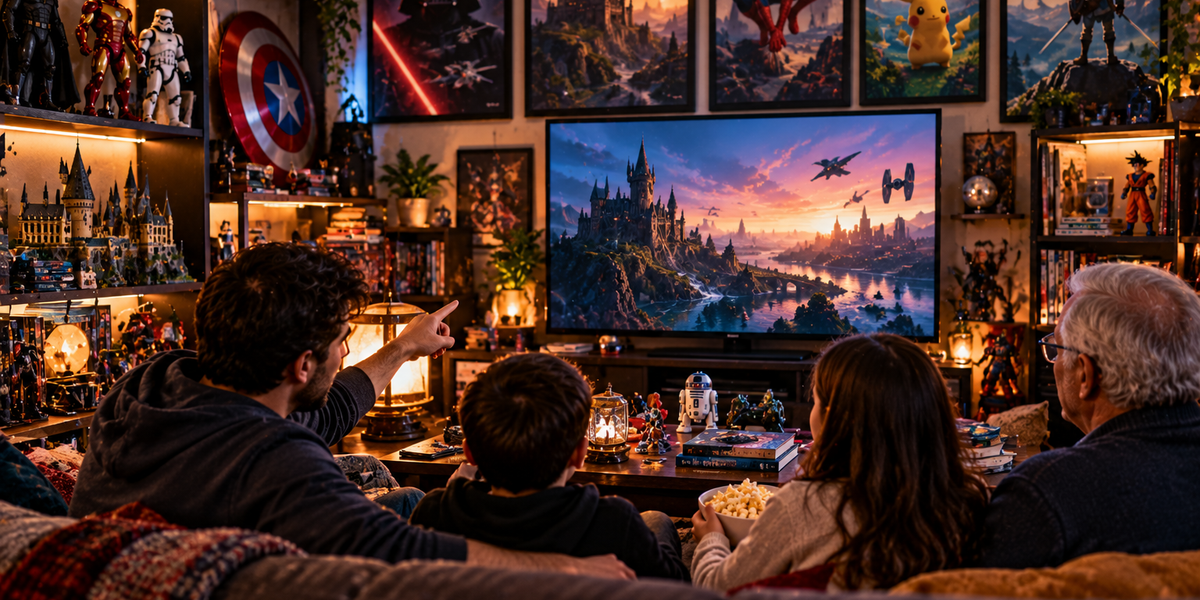
A parent who loved Star Wars as a child may eventually show it to their own children. Someone who grew up playing Nintendo games may introduce their children to Mario. A parent who loved superheroes may buy their child a Spider-Man costume.
At that point, fandom begins behaving almost like cultural inheritance.
The child receives more than the entertainment itself.
They also receive the parent’s enthusiasm.
The experience carries emotional weight because someone they love already considers it meaningful.
Later, the child may prefer completely different characters or versions of the franchise.
That is actually healthy for long-term fandom.
Each generation needs enough continuity to recognize the tradition and enough novelty to claim part of it as its own.
New Versions Keep Old Stories Alive
A franchise that refuses to change can become a museum piece.
Successful long-running fandoms continuously reinterpret themselves.
Doctor Who built renewal directly into its structure by allowing its central character to regenerate into new forms. Comic-book superheroes are repeatedly rebooted and reimagined. Star Trek has explored different crews and historical periods. Games introduce new mechanics while preserving familiar characters.
These reinventions sometimes anger existing fans.
That conflict is almost unavoidable.
Long-term franchises face a difficult problem: preserve too much and they become repetitive; change too much and they stop feeling like themselves.
The franchises that survive are usually those capable of changing around a recognizable core.
Every Generation Wants Its Own Version
Older fans often believe the version they encountered first is the definitive one.
That makes psychological sense.
First experiences carry enormous emotional power.
But generational fandom depends on allowing new audiences to form the same attachment to something different.
A child discovering a superhero through a modern animated film may eventually care about that interpretation as deeply as an older fan cares about a comic from decades earlier.
Neither connection is less real.
A healthy fandom develops layers.
Different generations have different favorite actors, games, series, characters, designs, and storylines.
The resulting disagreements can become intense, but they are also evidence that the property remains culturally alive.
Nobody argues passionately about entertainment everyone has forgotten.
Repetition Creates Cultural Familiarity
Long-lasting characters become recognizable even to people who have never consumed the original stories.
People know Superman’s symbol. They recognize Darth Vader’s helmet. They understand what a lightsaber is. Pikachu can be identified by people who have never played a Pokémon game.
This familiarity accumulates through repetition.
Movies, toys, advertisements, costumes, memes, games, television, clothing, and references in other media repeatedly expose audiences to the same cultural symbols.
Eventually, the franchise becomes part of general cultural literacy.
That creates an enormous advantage.
New stories do not need to introduce everything from zero because audiences already possess some knowledge of the world.
Merchandise Can Strengthen Emotional Attachment
Merchandise is often dismissed as the commercial side of fandom, but physical objects can play an important emotional role.
A toy, book, game cartridge, trading card, poster, costume, or collectible can connect a fictional world to someone’s physical environment.
Children play with characters and create new stories.
Collectors preserve objects associated with particular memories.
Fans display items that communicate their interests to others.
The fictional world becomes tangible.
Some objects also survive longer than the media that created them.
A childhood toy found decades later can instantly reactivate memories of the stories surrounding it.
Merchandise therefore does more than generate revenue.
It helps fandom occupy physical space.
Toys Let Children Continue the Story
This is particularly important for younger audiences.
When children play with action figures, building sets, cards, or costumes, they are not simply reproducing scenes from a movie.
They create new ones.
Characters from unrelated stories may meet. Villains become heroes. Entire adventures are invented that never appeared in official media.
The child becomes a storyteller.
That participation creates a deeper relationship than passive viewing alone.
The fictional universe becomes something they have personally inhabited.
Video games perform a similar function by allowing players to act inside worlds they previously only watched or read about.
Games Can Keep Fictional Worlds Alive for Hundreds of Hours
Interactive media changed fandom because it allowed audiences to spend extraordinary amounts of time inside fictional worlds.
A film may last two hours.
A game can occupy someone for hundreds.
Players explore environments, learn systems, make decisions, customize characters, and develop personal memories of events that happened during play.
This creates a different form of attachment.
Someone may remember not merely what a character did in a story but what they themselves did inside the fictional world.
As major franchises expand across film, television, books, games, and other media, these different forms of engagement reinforce one another.
Fandoms Need Communities
Stories create fans.
Communities create fandoms.
A person can love a movie privately without participating in fandom culture.
Fandom begins when that enthusiasm becomes social.
Fans discuss theories, recommend episodes, create artwork, attend conventions, share jokes, write stories, collect memorabilia, debate interpretations, and help newcomers understand the world.
Community keeps interest active between official releases.
A franchise might go years without a major new installment, yet fans continue producing conversations and creative work.
That activity prevents cultural disappearance.
Conventions Turn Digital Communities Into Physical Ones
Fan conventions demonstrate how powerful these communities can become.
People who normally interact through usernames and screens gather physically to celebrate the same interests.
They wear costumes, meet creators, buy artwork, attend discussions, and encounter thousands of other people who understand references that may seem obscure everywhere else.
The experience confirms that fandom is not merely about fictional content.
It is about belonging.
Someone may initially attend because they love a particular franchise and return because they love the community surrounding it.
At that point, the fandom has developed social infrastructure capable of surviving changes in the original media.
Fan Creativity Extends the Life of a Story
Long-lasting fandoms rarely depend entirely on official creators.
Fans produce their own culture.
They create illustrations, costumes, videos, music, theories, podcasts, websites, databases, modifications, fiction, memes, and analysis.
This continuous creative activity gives old stories new forms.
A film released decades ago can suddenly become culturally relevant because a meme introduces it to younger audiences.
An old game can receive new life through mods.
A fictional character can become popular again because fan artists reinterpret them.
The boundary between audience and creator becomes increasingly porous.
Official stories provide the raw material.
Fandom keeps remixing it.
Lore Gives Fans Something to Master
Deep fictional worlds reward knowledge.
A casual viewer can enjoy the story, while dedicated fans can spend years learning its history.
This creates a form of expertise.
Fans remember character relationships, timelines, fictional languages, locations, technologies, political factions, and obscure events.
The knowledge itself becomes enjoyable.
It also creates status within communities.
Someone who knows decades of comic history can explain references newer fans missed. A player who understands a game’s lore can connect tiny environmental clues to larger theories.
The fictional universe becomes something that can be studied.
That makes fandom unusually durable because there is always another layer to explore.
Mystery Keeps Communities Talking
Not every question should be answered.
Fandoms thrive on uncertainty.
Who is this mysterious character? What really happened before the story began? Is a particular interpretation correct? What will happen next?
Unanswered questions generate theories.
Theories generate discussion.
Discussion keeps communities active.
Creators sometimes deliberately leave ambiguity because audiences enjoy participating in interpretation.
A story that explains absolutely everything may provide closure, but closure can also reduce the need for conversation.
Mystery gives fandom something to do.
Shared Rituals Make Fandom Feel Like Tradition
Long-running fandoms develop rituals.
Fans rewatch particular movies during holidays. They attend midnight premieres. They replay favorite games every few years. They celebrate fictional dates, anniversaries, character birthdays, and franchise-specific events.
These rituals transform entertainment into tradition.
Traditions are powerful because they organize memory.
Someone may not simply remember watching a movie. They remember watching it every year with siblings or friends.
Once a fandom becomes attached to recurring social rituals, it becomes much harder for the culture to disappear.
The story is no longer just content.
It is part of how people spend time together.
Music Can Carry a Fandom Across Decades
Sound is extraordinarily effective at triggering memory.
Many long-running franchises have instantly recognizable musical themes.
A few notes can transport fans back to a particular fictional world before a character even appears.
Film scores, game soundtracks, opening themes, and musical motifs become emotional shortcuts.
This matters for generational fandom because music can survive changes in actors, visual effects, and storytelling styles.
A new production can use an old musical theme and immediately connect itself with decades of history.
The audience hears continuity before the story explains it.
Symbols Make Fandom Portable
Strong fandoms usually contain visual symbols that can represent the entire universe.
A logo, weapon, costume, silhouette, color combination, or emblem can instantly communicate membership.
These symbols appear on clothing, tattoos, accessories, stickers, toys, and online profiles.
A fan does not need to explain their interest.
The symbol does it for them.
Another fan recognizes it immediately.
That moment of recognition can create a tiny social connection between strangers.
Symbols allow fandom to travel outside the fictional work and become part of everyday identity.
The Internet Made Old Fandoms Much Harder to Kill
Before digital distribution, older entertainment could become difficult to access.
A television series might stop airing. A game console could disappear from stores. Books could go out of print.
The internet changed the survival conditions of fandom.
Fans can find information, discussions, clips, archives, communities, guides, and other materials almost instantly. Streaming and digital storefronts can make older works accessible to new audiences.
Social platforms continuously recycle cultural history.
A teenager can discover a film released decades before they were born because one scene suddenly becomes popular online.
Cultural time has become less linear.
Old media constantly reenters the present.
Memes Can Introduce Old Characters to New Audiences
Memes have become an unexpectedly powerful tool for cultural preservation.
A character may remain visible online even during periods when their original franchise has no major new release.
People who do not know the source begin recognizing the character.
Eventually, curiosity sends some of them toward the original work.
This means a decades-old film, game, or television series can suddenly find new audiences through a joke.
That would have been difficult in an earlier media environment.
The internet turns cultural fragments into advertisements for their own history.
Adaptations Create Bridges Between Generations
A successful adaptation can revive an entire fandom.
A new movie can send audiences toward old novels. A television series can make decades-old comics suddenly popular. A game adaptation can introduce viewers who have never touched the original game.
The best adaptations function as bridges rather than replacements.
New audiences receive an accessible entry point, while existing fans receive another interpretation of something familiar.
This can produce tension because adaptation always involves change.
Yet without reinterpretation, many older properties would struggle to remain visible.
Preservation and reinvention are not opposites.
Long-lasting fandoms need both.
Bad Installments Do Not Necessarily Kill Strong Fandoms
Every long-running franchise eventually produces something fans dislike.
A disappointing sequel, controversial adaptation, failed game, unpopular storyline, or poorly received reboot can trigger predictions that the franchise is finished.
Strong fandoms are surprisingly resilient.
Fans can simply reject one installment while remaining attached to the larger universe.
This is possible because their relationship is no longer dependent on one product.
They may have decades of favorite stories, characters, friendships, memories, and collectibles.
One disappointing release cannot erase all of that.
In a strange way, arguing about bad installments can even keep the fandom active.
Internal Arguments Are Almost Inevitable
The longer a fandom survives, the more versions of the property accumulate.
That creates disagreements.
Which era was best? Which actor played the character correctly? Which stories count as canon? Was the reboot necessary? Did the adaptation understand the original?
These arguments can become exhausting, but they emerge partly because different generations entered through different doors.
Each group develops emotional loyalty to its own version.
Long-lasting fandom therefore creates a paradox.
The diversity that allows the franchise to survive can also divide the people who love it.
Healthy communities learn to make room for multiple generations of attachment.
Gatekeeping Can Damage Generational Fandom
One of the greatest threats to fandom renewal comes from existing fans themselves.
If longtime members treat newcomers as less legitimate because they entered through a movie, game, adaptation, or recent release, they make the community harder to join.
This is particularly ironic because every longtime fan was once new.
Generational fandom requires a constant supply of beginners.
Someone needs to ask the obvious questions.
Someone needs to encounter the iconic plot twist for the first time.
Someone needs to buy their first comic, watch their first episode, or choose their first game.
A fandom that cannot welcome beginners eventually becomes an archive.
Some Stories Contain Timeless Emotional Problems
Technology and cultural references age.
Human emotions age much more slowly.
Stories about friendship, family, courage, jealousy, identity, sacrifice, belonging, fear, ambition, and loss can survive changes in media because each generation recognizes those experiences.
This is why a story involving spaceships or magical creatures can remain emotionally accessible decades later.
The fictional environment may be extraordinary.
The emotional problem is familiar.
Long-lasting franchises often balance both.
They give audiences a world unlike reality while filling it with feelings that require no explanation.
Fandom Can Become Part of Personal Identity
At a certain level of attachment, people stop saying only that they enjoy something.
They describe themselves through it.
They are Trekkies, gamers, Potterheads, comic fans, Tolkien readers, or members of countless other communities.
The fictional world becomes connected with friendships, values, creativity, humor, and personal history.
Once that happens, abandoning the fandom would mean giving up more than entertainment.
It could mean losing part of a social identity.
That helps explain why fandom debates can become unexpectedly emotional.
People are not always arguing only about fictional characters.
They may feel that something connected to their own identity is being challenged.
Long-Running Fandoms Become Cultural Memory
Eventually, the oldest fandoms move beyond individual generations.
They become part of cultural memory.
People recognize characters without knowing where they originated. Phrases from fictional stories enter ordinary language. Music becomes instantly identifiable. Costumes appear every Halloween. References appear in other books, films, television shows, and games.
At that point, the fandom has achieved something much more powerful than popularity.
It has become part of the culture other stories are built upon.
New creators grow up as fans and eventually produce work influenced by the stories they loved.
The fandom reproduces itself through creativity.
The Best Fandoms Give Every Generation Something New
The franchises that survive longest usually accomplish two seemingly contradictory things.
They preserve enough of themselves to remain recognizable while changing enough to remain relevant.
The characters may look different. The technology improves. The storytelling changes. New audiences arrive with different expectations.
Yet something at the center remains familiar.
That balance is incredibly difficult.
Too much change breaks the emotional connection with the past.
Too little change turns the franchise into nostalgia for an audience that keeps getting older.
Generational fandom lives somewhere between those extremes.
A Fandom Survives When People Want to Pass It On
The ultimate test of a fandom is not how loudly people celebrate it during its peak.
It is whether someone still cares enough years later to show it to another person.
A parent puts on a favorite movie for their child. An older sibling hands over a game. A friend recommends a novel written before either of them was born. Someone discovers an old series online and tells everyone else they need to watch it.
That is how entertainment becomes tradition.
The technology changes. The actors change. The platforms change. The audience changes.
But the act remains remarkably simple.
Someone loves a story enough to say, “You have to see this.”
And another generation begins.