
How AI Actually Works (No Math Required)
Artificial intelligence can feel strangely mysterious because the results often look more intelligent than the process behind them.
You ask an AI system to explain quantum physics, create an image of a futuristic city, recognize a face in a photograph, translate a sentence, recommend a movie, or write computer code, and a response appears within seconds. It can sometimes feel as though there must be a tiny digital mind somewhere inside the machine thinking through the problem.
That is not really how modern AI works.
At its core, artificial intelligence is built around finding patterns in enormous amounts of information and using those patterns to make predictions. Different AI systems make different kinds of predictions, but the fundamental idea appears again and again.
A language model predicts what text should come next. An image generator predicts what visual information should appear. A recommendation system predicts what you might want to watch or buy. A spam filter predicts whether an email belongs in your inbox.
The remarkable part is what happens when those prediction systems become extremely large, sophisticated, and well trained.
Artificial Intelligence Is an Umbrella Term
AI is not one specific technology.
The term describes a broad collection of computer systems designed to perform tasks associated with intelligence, such as recognizing patterns, understanding language, solving problems, making predictions, interpreting images, and making decisions.
Some AI systems are extremely narrow.
A system designed to detect fraudulent credit card transactions might be excellent at identifying suspicious payments but completely incapable of answering a simple question about history.
Other systems are more general-purpose and can work across writing, coding, analysis, images, and many other tasks.
When people talk about the recent AI boom, they are often talking about machine learning and particularly deep learning, the technologies behind many modern generative AI systems.
Traditional Programming Gives the Computer Rules
To understand machine learning, it helps to compare it with traditional programming.
Suppose you want a computer to calculate a restaurant bill.
A programmer can provide explicit instructions: add the prices, calculate the tax, add the tip, and display the total.
The computer follows those rules exactly.
But imagine trying to write explicit rules that allow a computer to recognize every possible photograph of a cat.
You might tell it that cats have ears, whiskers, four legs, and tails.
Immediately, problems appear.
Dogs can have those features too. A cat may be curled into a ball. Its tail may be hidden. The photograph might show only its face. Lighting, angle, breed, age, background, and image quality can all vary.
Writing enough rules to handle every possibility becomes nearly impossible.
Machine learning approaches the problem differently.
Instead of telling the computer every rule for identifying a cat, you show it many examples and allow the system to learn patterns associated with cats.
Machine Learning Means Learning From Examples
Imagine showing a machine learning system thousands or millions of images.
Some contain cats. Others do not.
During training, the system gradually identifies patterns that help distinguish the categories.
Nobody necessarily tells it, “A cat has this exact combination of pixels.”
Instead, the model adjusts its internal structure as it encounters examples.
Early in training, its predictions may be terrible.
It might confidently identify a pillow as a cat.
When the system makes mistakes, the training process adjusts it slightly so that future predictions become more accurate.
Repeat this process an enormous number of times and useful behavior can emerge.
That process is the foundation of much of modern AI.
A Neural Network Is a Giant Pattern-Learning System
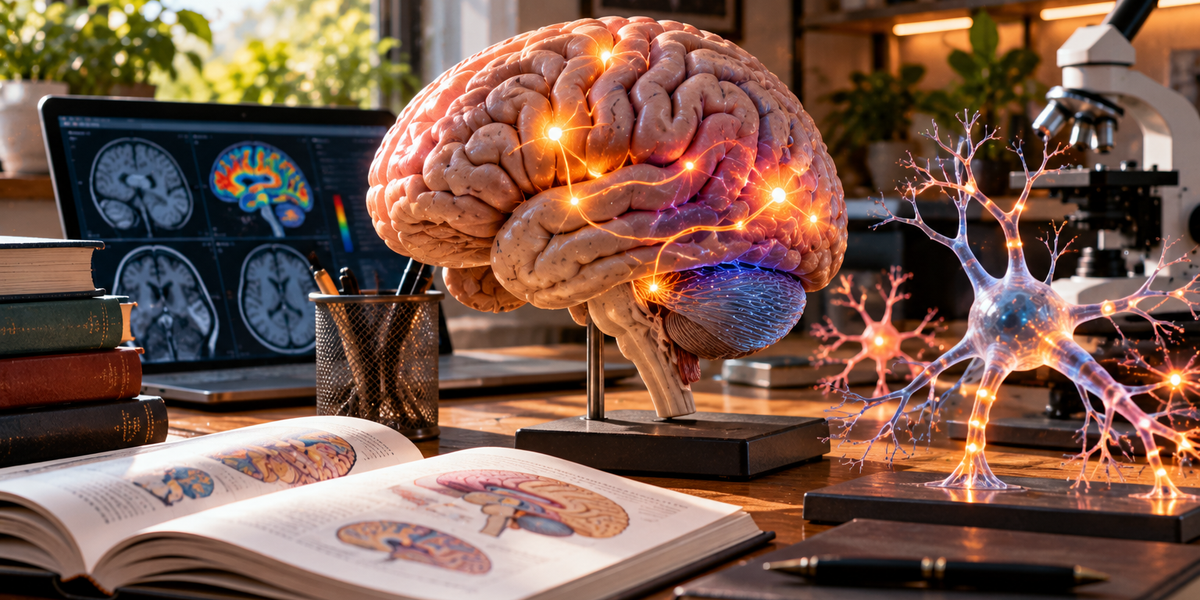
Many modern AI systems use structures called artificial neural networks.
The name is inspired loosely by biological brains, but artificial neural networks are mathematical systems rather than miniature electronic brains.
They contain layers of interconnected computational units.
Information enters the network, passes through those layers, and produces an output.
During training, the strengths of the connections are adjusted.
Those adjustable values are commonly called parameters.
A small model might contain relatively few parameters. Large modern AI models can contain billions or more.
You can think of those parameters as an enormous collection of tiny adjustable settings.
Training determines how those settings should be arranged so that the model becomes better at producing useful outputs.
Deep Learning Simply Means Many Layers
The “deep” in deep learning refers to neural networks containing multiple layers of processing.
Different layers can learn different kinds of patterns.
In an image system, early layers might respond to simple visual features such as edges or color changes. Later layers can combine those signals into more complicated patterns associated with textures, shapes, objects, or faces.
Language models develop their own internal representations of relationships between words, phrases, concepts, grammatical structures, and contexts.
Nobody needs to manually program every one of these representations.
They emerge through training.
This ability to learn useful internal patterns is one reason deep learning became so powerful.
Training Is Where the Heavy Learning Happens
When you interact with a trained AI model, you are generally not watching the original training process happen.
Training usually occurred earlier.
During training, enormous amounts of computing power are used to process examples and repeatedly adjust the model.
The process can be thought of as a gigantic cycle.
The model receives information. It makes a prediction. The prediction is compared with the desired result. The system calculates how wrong it was. Its internal parameters are adjusted slightly.
Then it tries again.
And again.
And again.
At enormous scale, this repeated correction gradually creates a model capable of recognizing and generating complex patterns.
Large Language Models Learn From Text Patterns
A large language model, or LLM, is trained to work with language.
One of the central training tasks is deceptively simple: predict what comes next.
Imagine the sentence:
“The dog chased the…”
A reasonable continuation might be “ball.”
But depending on context, it could also be “cat,” “car,” “rabbit,” or hundreds of other possibilities.
During training, a language model encounters enormous numbers of language examples and learns statistical relationships between pieces of text.
Over time, it becomes extremely good at predicting plausible continuations.
At first glance, that may sound too simple to explain systems capable of writing essays or computer code.
The important part is scale.
Predicting text well requires learning an enormous amount about how language and the concepts expressed through language relate to one another.
AI Does Not Read Words Exactly Like Humans Do
Language models usually break text into smaller units called tokens.
A token might represent an entire word, part of a word, punctuation, or another small piece of text.
The model converts these tokens into numerical representations that can be processed by the neural network.
It does not see the word “apple” as letters printed on a page.
It processes a mathematical representation connected through training to patterns involving fruit, food, trees, recipes, technology companies, colors, and countless other contexts.
Those relationships allow the model to use words appropriately in many different situations.
Meaning Emerges From Relationships
One of the fascinating things about language models is that they can develop representations that capture relationships between concepts.
Words used in similar contexts become connected in useful ways.
The model learns that “Paris” relates to France differently from how “Paris” relates to a person named Paris. Context determines which relationships matter.
This happens across enormous numbers of concepts.
The model is not simply storing a dictionary definition beside every word.
It is learning patterns in how ideas appear together.
That is why context is so important when interacting with AI.
The surrounding information helps determine which learned relationships should influence the response.
The Transformer Changed Modern AI
Many modern language models are based on an architecture known as the transformer.
One of its important capabilities is something called attention.
Attention allows the model to determine which parts of the input are particularly relevant to other parts.
Consider the sentence:
“Sarah gave Emma the book because she had finished reading it.”
Understanding the sentence requires tracking relationships between several words and concepts.
Modern language models use attention mechanisms to weigh relationships throughout the context rather than simply processing each word in isolation.
At large scale, this makes it possible to handle complicated language patterns much more effectively.
What Happens When You Ask AI a Question?
Suppose you type:
“Why is the sky blue?”
Your text is first converted into tokens.
Those tokens are transformed into numerical representations and processed through the model’s layers.
The model uses the patterns learned during training, together with the context of your prompt, to calculate probabilities for what should come next.
It selects a token.
Then it calculates what should come after that.
Then the next one.
The response is generated piece by piece.
This happens so quickly that the result appears to arrive as flowing language.
But underneath, the system is repeatedly predicting the next part of the response based on everything that came before it.
AI Is Not Simply Copying Sentences From a Database
A common misconception is that a language model searches through a giant database, finds a matching paragraph, and pastes it into the conversation.
That is generally not how generation works.
The information learned during training is encoded across the model’s parameters.
When generating an answer, the model constructs a response based on learned patterns rather than retrieving one predetermined paragraph for every possible question.
This is why the same question can produce differently worded answers.
It also explains why AI can respond to combinations of ideas that may never have appeared together exactly that way during training.
But AI Is Also Not a Perfect Encyclopedia
The fact that a language model can generate convincing explanations creates a major weakness.
Its fundamental job is to produce plausible language.
Plausible is not identical to true.
A model can generate a sentence that sounds completely confident while containing incorrect information.
These errors are often called hallucinations.
They occur because the system is generating an answer based on learned patterns rather than consulting an infallible internal database of verified facts.
Modern AI systems can reduce this problem through better training, reasoning techniques, access to search or databases, and other tools.
But fluent language should never automatically be mistaken for guaranteed accuracy.
Why AI Sometimes Gives Different Answers
Ask an AI system the same open-ended question several times and you may receive different responses.
This happens because generation can involve probability rather than always selecting one fixed continuation.
Suppose the model calculates that several words would make sense next.
One might have a 45% probability, another 25%, and several others smaller probabilities.
Depending on how the system is configured, it may sometimes select alternatives rather than always choosing the single highest-probability option.
This variation makes AI useful for brainstorming and creative work.
It also means outputs are not always perfectly reproducible.
Why Bigger Models Often Become More Capable
Increasing the size of a neural network gives it more capacity to represent complicated patterns.
But size alone is not enough.
Models also depend on the quality and quantity of training data, the training process, computing resources, architecture, and techniques used after initial training.
When these factors improve together, models can develop surprisingly broad abilities.
A system trained heavily around language patterns may become capable of translation, summarization, coding, explanation, classification, and other tasks without having a completely separate program written for each one.
That flexibility is one of the major differences between modern general-purpose AI and older specialized software.
Training Data Matters Enormously
An AI system learns from the information used during training.
If that information contains mistakes, biases, gaps, or distortions, the model can learn patterns reflecting those problems.
This is one reason data quality matters.
Developers may filter training material, balance datasets, remove certain content, add carefully created examples, and evaluate models for problematic behavior.
But creating a perfectly neutral dataset is extremely difficult because human-generated information itself contains disagreement, historical bias, cultural assumptions, and errors.
AI systems do not appear from nowhere.
They inherit patterns from the information and feedback used to build them.
Training Is Only the First Stage
A raw language model trained primarily to predict text may be capable but difficult to use.
Developers therefore perform additional training and alignment.
The model can be shown examples of useful answers and receive feedback about which responses are better.
This helps teach it to follow instructions, answer questions clearly, refuse certain dangerous requests, and behave more like a useful assistant rather than simply continuing text.
Human feedback can play an important role in this process.
More recently, automated feedback and other training methods have also become increasingly important.
The goal is to transform raw predictive ability into useful behavior.
AI Can Use Tools
A language model by itself has limitations.
It may not know today’s weather. It cannot reliably perform every calculation mentally. Its original training does not automatically contain information created afterward.
Modern AI systems can therefore be connected to tools.
The model might search the web, execute code, query a database, inspect a document, generate an image, or interact with another software system.
This changes what AI can do.
Instead of relying entirely on information encoded during training, the system can retrieve current information or perform actions when necessary.
The language model becomes the reasoning and communication layer around a larger collection of capabilities.
Memory and Context Are Different From Training
When an AI remembers something from earlier in a conversation, that does not necessarily mean the entire model has been retrained.
The conversation can simply be included as context.
Imagine giving someone several pages of notes before asking a question.
They can use those notes without permanently memorizing them.
AI context works somewhat similarly.
Information supplied during a conversation can influence the next response because the model processes it alongside the new request.
Long-term memory systems can store selected information separately and provide it again when useful.
Neither process is the same as changing the model’s fundamental trained parameters.
How Image Generators Work
Generative AI is not limited to text.
Image generators learn patterns from large collections of visual information and associated descriptions or other signals.
One common family of techniques uses diffusion.
During training, the system learns how images relate to progressively added noise.
Eventually, it learns the reverse process: starting with something resembling random visual noise and gradually transforming it into a structured image.
When you request “a lighthouse on a cliff during a thunderstorm,” the model uses learned relationships between those concepts and visual patterns to guide the generation process.
It does not necessarily retrieve one existing lighthouse photograph.
It constructs a new arrangement based on patterns learned during training.
Why AI Images Sometimes Make Strange Mistakes
Image generators can create astonishingly realistic scenes while occasionally failing at surprisingly basic details.
Historically, hands became a famous example.
The reason is that the model is not constructing a human body using the same understanding an anatomist would.
It is generating visual patterns that statistically resemble what it learned.
Hands are especially complicated because they appear in countless poses, angles, and partially hidden configurations.
Modern systems have improved dramatically, but the underlying lesson remains important.
Looking correct and understanding something exactly are not necessarily the same process.
Recommendation Algorithms Are AI Too
When people hear “AI,” they increasingly imagine chatbots and image generators.
But machine learning has been operating quietly in everyday technology for years.
Streaming platforms predict what you might want to watch.
Music services recommend songs.
Online stores suggest products.
Banks detect unusual transactions.
Email systems filter spam.
Navigation software predicts traffic.
Social platforms decide which posts are likely to keep your attention.
These systems may not generate essays or images, but they use many of the same broad principles: analyze patterns in data and predict what is likely to happen next.
AI Recognition Systems Work Through Classification
Some AI systems are designed primarily to identify things rather than generate them.
A photo application might recognize that an image contains a dog.
A medical imaging system might identify patterns associated with a particular abnormality.
A security system might detect unusual behavior.
These models receive information and assign probabilities to possible categories or outcomes.
Again, the result is usually not absolute certainty.
The system might effectively determine that one interpretation is much more likely than the alternatives.
That distinction matters when AI is used for important decisions.
A prediction is not automatically a fact.
Why AI Needs So Much Computing Power
Training large AI models requires performing enormous numbers of calculations.
Specialized processors such as GPUs are particularly useful because they can perform many calculations in parallel.
Large training projects can use vast computing clusters containing thousands of powerful processors working together.
Training can take weeks or months and consume substantial electricity.
Once the model has been trained, running it is generally much less expensive than creating it from scratch, although serving millions of users can still require enormous infrastructure.
The friendly chat window hides data centers filled with specialized computing hardware.
AI Does Not “Know” Things Exactly Like Humans Do
Words such as “know,” “think,” “understand,” and “learn” become tricky when discussing AI.
We use them because they make conversation easier.
But human understanding is connected to bodies, senses, emotions, lived experiences, social relationships, memory, and consciousness.
AI systems operate differently.
A language model can explain what rain feels like without ever standing in rain.
It can describe heartbreak without having a heart.
It can write about childhood without having had one.
Its capabilities come from processing patterns in information rather than living through the experiences described.
That does not make the output useless.
It simply means human and machine intelligence should not automatically be treated as the same thing.
AI Can Still Produce New Combinations
Saying AI learns patterns does not mean it can only repeat familiar material.
Humans also create by combining existing knowledge in new ways.
Generative AI can connect concepts, styles, structures, and ideas into combinations that were not explicitly presented as one finished example during training.
Ask for a story about a medieval accountant investigating financial fraud involving dragons and the model can construct one.
That does not mean it independently experienced inspiration.
It means the learned system is flexible enough to combine patterns productively.
This ability to generalize beyond exact training examples is one of the reasons generative AI is useful.
Why Prompting Matters
The model generates responses based heavily on context.
A vague instruction leaves many possible interpretations.
A detailed instruction narrows them.
“Write about Rome” could mean history, tourism, architecture, food, ancient politics, or modern life.
“Explain how ordinary people lived in ancient Rome for a high-school audience” gives the model much more information about the desired response.
Good prompting is therefore less about discovering magical secret phrases and more about communicating clearly.
Tell the system what you want, provide relevant context, specify important constraints, and describe the desired output.
AI works better when the problem is well defined.
AI Can Sound More Certain Than It Is
Humans often communicate uncertainty through hesitation.
AI-generated language can sound polished regardless of how reliable the underlying information is.
This creates a dangerous illusion.
A completely correct explanation and a subtly incorrect explanation may both sound equally confident.
For low-stakes brainstorming, this may not matter much.
For medicine, law, finance, safety, academic research, or other high-stakes subjects, verification becomes far more important.
One of the most useful skills in the AI era is learning when an answer needs evidence rather than simply accepting fluency as proof.
AI Is Powerful Because Prediction Scales Surprisingly Far
The most surprising thing about modern AI is how much capability can emerge from prediction.
Predicting language well requires learning grammar, style, structure, relationships between concepts, common reasoning patterns, facts represented in text, and how different types of documents work.
At sufficient scale, these abilities combine.
A system trained around prediction can suddenly appear capable of explaining, summarizing, translating, programming, brainstorming, analyzing, and teaching.
That does not mean prediction magically becomes human consciousness.
It means that predicting complex human-generated information is a much richer task than it initially sounds.
What AI Is Actually Doing
Strip away the futuristic language and the basic story becomes much easier to understand.
People create enormous amounts of data.
Machine learning systems process examples from data and adjust internal parameters to capture useful patterns.
Neural networks provide structures capable of representing extraordinarily complicated relationships.
Training gradually improves those representations.
When you provide a new input, the trained model uses what it learned to predict an appropriate output.
For language models, that means generating text step by step. For image models, it can mean constructing visual information. For recommendation systems, it means predicting what you may prefer. For recognition systems, it means estimating what an input most likely represents.
The scale is enormous, the engineering is sophisticated, and the resulting abilities can be remarkable.
But there is no tiny person inside the computer reading your question and deciding what to say.
There is a trained mathematical system processing patterns at extraordinary speed.
And perhaps the strangest thing about modern AI is that once those patterns become complex enough, the result can start to feel remarkably like intelligence.