
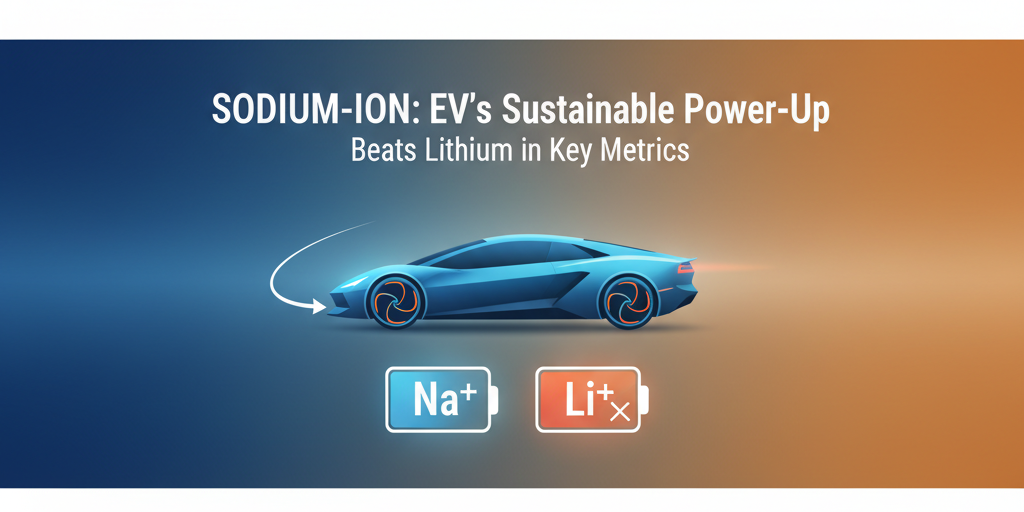
World's First Sodium-Ion EV Battery Beats Lithium in Key Metric
World's First Sodium-Ion EV Battery Beats Lithium in Key Metric
In a groundbreaking development for electric vehicles, researchers have unveiled the world's first sodium-ion battery capable of powering an electric vehicle (EV). This innovation not only promises to challenge the dominance of lithium-ion batteries but does so by outperforming them in a crucial aspect: sustainability. As the automotive industry shifts gears towards greener alternatives, sodium-ion technology could pave the way for a more environmentally friendly future.
Key Takeaways
- The first sodium-ion battery for EVs has been developed, marking a significant milestone in battery technology.
- Sodium-ion batteries outperform lithium-ion variants in terms of thermal stability, reducing the risk of overheating.
- This new battery technology utilizes abundant and inexpensive sodium, presenting a sustainable alternative to lithium.
- Sodium-ion batteries offer comparable energy density to lithium-ion batteries, making them suitable for electric vehicle applications.
- The development aims to enhance battery recycling processes, contributing to a circular economy in battery production.
- Real-world testing shows that sodium-ion batteries deliver reliable performance without the environmental drawbacks associated with lithium mining.
- The transition to sodium-ion technology could alleviate resource scarcity concerns linked to lithium extraction.
Sodium-Ion Batteries: A Game Changer?
Sodium-ion batteries represent a significant shift in how we think about energy storage. While lithium-ion batteries have been the backbone of the EV revolution, their reliance on lithium—a resource that is becoming increasingly scarce and environmentally damaging to extract—poses a significant challenge. Sodium, on the other hand, is abundant and widely available, making it an attractive alternative.
What sets sodium-ion technology apart is its thermal stability. Traditional lithium-ion batteries can overheat and pose fire risks, particularly under heavy use or in extreme conditions. The sodium-ion counterpart significantly mitigates this risk, making it a safer option for consumers and manufacturers alike. In fact, the researchers behind this breakthrough emphasize that the sodium-ion battery can withstand higher temperatures without compromising performance or safety.
Energy Density: Competing with Lithium
One of the key metrics for any battery technology is energy density—the amount of energy stored per unit weight. Initial findings indicate that sodium-ion batteries can achieve energy densities comparable to lithium-ion batteries, which is a crucial factor in determining the range and efficiency of electric vehicles.
For consumers, this means that vehicles powered by sodium-ion technology could travel similar distances on a single charge, addressing one of the biggest concerns for EV users: range anxiety. As manufacturers begin to explore the practical applications of sodium-ion batteries, we could see a new wave of electric vehicles that combine the best aspects of both battery technologies.
Recycling: A Sustainable Future
One of the most compelling advantages of sodium-ion batteries lies in their potential for recycling. The current lithium-ion recycling process is complex and often economically unviable. However, sodium-ion batteries can be designed with recycling in mind, allowing for easier recovery of materials and reducing waste. This contributes to a more sustainable lifecycle for batteries, supporting a circular economy that is crucial in the fight against climate change.
The ability to recycle sodium-ion batteries efficiently could set a new standard in the industry, encouraging manufacturers to adopt more sustainable practices. It's not just about creating a new battery; it's about redefining how we handle energy storage in a world increasingly focused on sustainability.
Real-World Applications and Future Prospects
The implications of this breakthrough are vast. As companies invest in sodium-ion technology, we can expect to see it implemented not only in electric vehicles but also in renewable energy storage systems. This could enhance the stability and reliability of our power grids, especially as we transition to more renewable energy sources.
While lithium-ion batteries still hold a significant market share, the advent of sodium-ion technology signals a shift in the industry. Major automotive manufacturers are already exploring partnerships to integrate sodium-ion batteries into their future models, highlighting the growing interest and potential of this technology.
Conclusion
The introduction of sodium-ion batteries is not just a technical achievement; it represents a paradigm shift in how we view energy storage for electric vehicles. With their superior thermal stability, comparable energy density, and sustainability advantages, sodium-ion batteries could redefine the future of EVs. As we forge ahead in the quest for a greener planet, this innovation reminds us that sometimes the most abundant resources can lead to the most significant breakthroughs. The road ahead might be paved with sodium, and that could be a game changer for the automotive industry and beyond.