
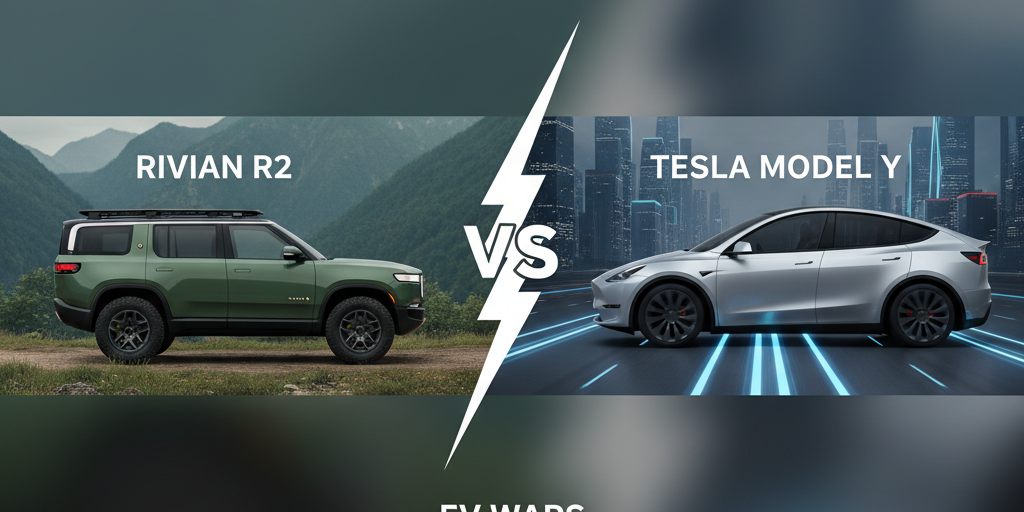
Rivian R2 Challenges Tesla Model Y in EV Wars
Rivian R2 Challenges Tesla Model Y in EV Wars
As automotive giants race to dominate the electric vehicle (EV) market, a new contender is stepping into the ring. Rivian's R2 aims to take on Tesla's Model Y, a vehicle that has become synonymous with electric driving. With Rivian's reputation for rugged utility and Tesla's established tech prowess, the battle promises to reshape the EV landscape.
Key Takeaways
- Rivian R2 targets a more budget-conscious segment, with a starting price near $40,000.
- Tesla Model Y continues to lead in sales, with its established brand loyalty and extensive charging network.
- Rivian emphasizes sustainability, utilizing eco-friendly materials in the R2's design.
- The R2 offers unique features, including a "gear tunnel" for extra storage, appealing to outdoor enthusiasts.
- Tesla's Autopilot system remains a significant draw, with continuous software updates enhancing its capabilities.
- Both vehicles feature impressive range, with the R2 expected to hit around 300 miles per charge.
- Rivian's direct-to-consumer model contrasts Tesla's established dealership framework, creating different purchasing experiences.
Rivian R2: A Fresh Approach to Electric Mobility
Rivian has carved out a niche in the EV market with its adventure-oriented vehicles. The R1T pickup and R1S SUV have garnered attention for their rugged design and off-road capabilities. Now, the R2 aims to broaden Rivian's appeal, targeting families and budget-conscious consumers who desire an electric vehicle without the Tesla price tag. Set to launch in 2026, the R2 is projected to start around $40,000, significantly undercutting the Model Y, which typically starts in the mid-$50,000 range.
Rivian's commitment to sustainability is evident throughout the R2's design. The company plans to use eco-friendly materials, such as recycled plastics and sustainable wood, appealing to environmentally conscious buyers. This focus on sustainability could resonate with consumers looking for ethical alternatives in their automotive choices.
Tesla Model Y: The Established Leader
Despite the fresh competition, Tesla's Model Y remains an industry leader. With impressive sales figures and a loyal customer base, it continues to dominate the EV market. Tesla's expansive Supercharger network and robust software capabilities give it an edge that new entrants like Rivian will find hard to match.
Autopilot, Tesla's semi-autonomous driving system, is a significant selling point for the Model Y. Regular software updates not only enhance the system's functionality but also keep customers engaged with their vehicles. The ability to remotely update software is a cornerstone of Tesla's appeal, and Rivian will need to find a way to compete on this front.
Unique Features of the Rivian R2
What sets the Rivian R2 apart from its competitors? A key feature is its "gear tunnel," a unique storage solution that extends horizontally between the cab and the bed. This feature caters to outdoor enthusiasts, providing a convenient space for gear that doesn’t compromise cabin space. Additionally, the R2's design emphasizes practicality, with ample interior space and innovative storage solutions.
The R2 also promises a range of about 300 miles, which aligns closely with the Model Y's performance. Rivian's engineering team is confident that they can deliver a vehicle that combines range and functionality, appealing to both urban drivers and adventure seekers.
The Road Ahead: A Competitive Landscape
As Rivian and Tesla face off, it’s crucial to consider the broader automotive landscape. The EV market is rapidly evolving, with traditional automakers and new startups alike vying for consumer attention. While Rivian has a strong brand identity tied to adventure and sustainability, Tesla’s established infrastructure and brand loyalty present significant barriers.
Rivian’s direct-to-consumer sales model contrasts sharply with Tesla’s approach. By bypassing traditional dealership networks, Rivian aims to create a streamlined buying experience. However, Tesla's established presence means that many consumers are already familiar with its products and services, making it a tough competitor.
Conclusion: The Future of Electric Vehicles
The rivalry between Rivian's R2 and Tesla's Model Y is more than just a competition for market share; it's a defining moment for the future of electric vehicles. With both companies focusing on different segments of the market, consumers are set to benefit from a wider array of choices. As 2026 approaches, the question remains: can Rivian carve out its space in a market dominated by Tesla? Only time will tell, but one thing is for sure—this battle will push both companies to innovate and evolve, ultimately benefiting the consumer.